

Quick Answer: UK roofs last 15-150+ years, depending on material choice, with slate offering the longest lifespan and asphalt shingles the shortest, while proper maintenance extends any roof's life by 50%.
UK roof lifespans range from around 15 years to well over a century, all down to the material you choose. Slate roofs can last a lifetime, while asphalt wears out much sooner. With proper upkeep, any roof can last far longer and save you serious money over time. This guide covers every common UK roofing material, the factors that shorten or extend their life, and the clear warning signs that tell you it’s time to act.
Key Takeaways
- Pitched roofs average 40-60 years, whilst flat roofs typically last 20-30 years, though premium materials like slate can reach 150+ years with proper care.
- Regular maintenance prevents 95% of roofing problems and can add 20 years to your roof’s life
- Heavy rainfall, wind exposure, freeze-thaw cycles and moss growth all accelerate wear, making location and maintenance even more critical than material choice alone.
How Long Do Different Roofing Materials Last?
The material you choose fundamentally determines how long your roof will protect your home. Let’s break down what you can realistically expect from each option.
Pitched Roof Materials
Pitched roofs dominate UK residential properties, and the longevity variation between materials is genuinely dramatic. Here’s what each common material delivers in real-world conditions:
| Material | Lifespan | Key Characteristics |
|---|---|---|
| Natural slate | 80–150+ years | Longest-lasting option; many historic UK buildings retain original slate roofs |
| Clay tiles | 50–100+ years | Traditional and highly durable; requires resealing approximately every 10 years |
| Concrete tiles | 40–60 years | Budget-friendly with an excellent cost-to-durability ratio |
| Metal roofing (standard) | 40–70 years | Steel and aluminium options offer solid longevity and modern performance |
| Metal roofing (premium) | 100+ years | Copper, zinc, and stainless steel considered lifetime investments |
| Asphalt shingles (standard) | 15–25 years | Entry-level roofing option with the shortest lifespan |
| Asphalt shingles (architectural) | 25–30 years | Upgraded shingle design with improved durability and appearance |
The initial cost often correlates with longevity, but not always in obvious ways. Sometimes, a mid-range material maintained brilliantly will outlast a premium material that’s been neglected. Your choice should balance upfront budget, aesthetic preferences, and how long you plan to own the property.
Flat Roof Systems
Flat roofs face fundamentally different challenges than their pitched counterparts. Water drainage is slower, pooling happens more easily, and UV exposure tends to be more intense. Here’s how different flat roof materials stack up:
| Material | Lifespan | Notes |
|---|---|---|
| EPDM rubber | 25–40 years | Handles UK weather patterns well; installation quality matters less than with some alternatives |
| Fibreglass (GRP) | 25–30 years | Seamless surface resists water exceptionally well but can become brittle over time |
| Built-up felt | 20–25 years | Traditional flat roofing solution that has largely been overtaken by newer materials |
| Single-ply membranes (PVC/TPO) | 25–40 years | Lightweight and flexible; increasingly popular for commercial and large flat roof applications |
| Lead sheet | 50+ years | Most expensive option but offers exceptional longevity when correctly installed |
The gap between pitched and flat roof lifespans isn’t a design flaw (it’s physics). Proper drainage becomes absolutely critical with flat roofs, and even minor installation errors create problems that pitched roofs would shrug off. Regular inspections matter even more here.
If your roof is approaching the end of its expected lifespan, we can help assess whether repair or replacement makes more sense through our new roof and re-roofing services.
What Affects Roof Lifespan in the UK?
Material quality is only part of the equation. Several UK-specific factors dramatically impact how long roofs actually last in practice.
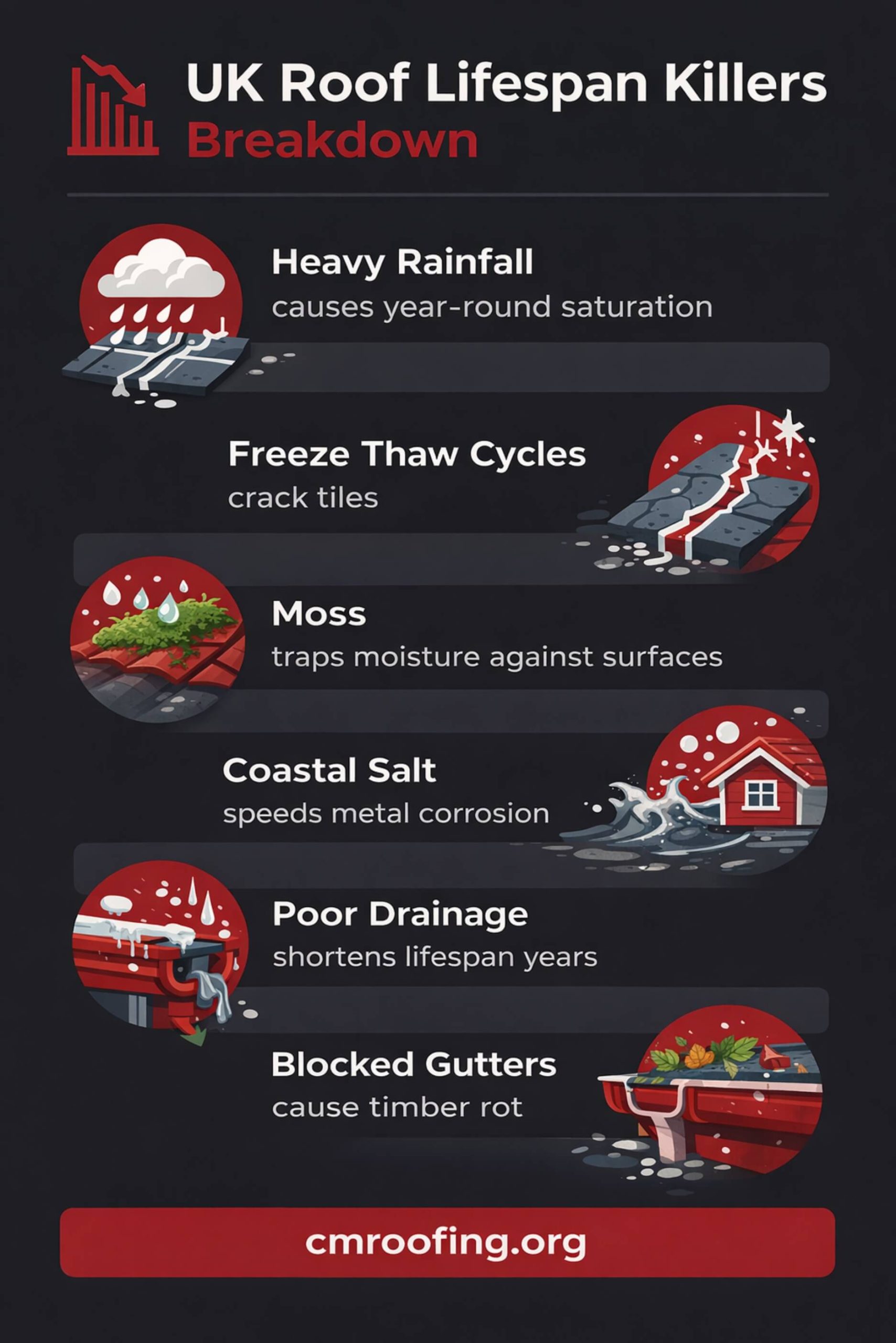
Our climate is genuinely challenging for roofing materials.
Heavy rainfall creates prolonged wetness that causes erosion, leaks, and rot over time. Coastal areas face additional punishment from salt-laden winds that accelerate corrosion (particularly brutal on metal components).
According to Met Office climate data on rainfall, temperature variation, and weather exposure, it’s clear that the UK’s cool, damp conditions also bring regular freeze-thaw cycles, which stress roofing materials through repeated expansion and contraction.
Biological growth is the silent killer of UK roofs.
Biological growth like moss and algae is a common issue in the UK’s cool, damp climate and can trap moisture against tiles, increasing the risk of freeze-thaw damage, blocked drainage, and timber rot if left unchecked.
While BRE research shows clay and concrete tiles can remain serviceable for decades under normal weathering, unchecked moss and algae still accelerate deterioration and should be removed as part of regular maintenance.
Your location matters more than you’d think.
Coastal properties face faster deterioration from salt exposure. Urban areas experience accelerated weathering from air pollution. Properties with overhanging vegetation retain more moisture, which creates additional stress. Two identical roofs can age very differently based purely on their surroundings.
Addressing small issues promptly through our professional roof repair services prevents water ingress and extends your roof’s lifespan significantly.
Signs Your Roof Needs Attention
Catching roof problems early saves thousands in repairs. Some issues need immediate attention, while others give you time to plan.
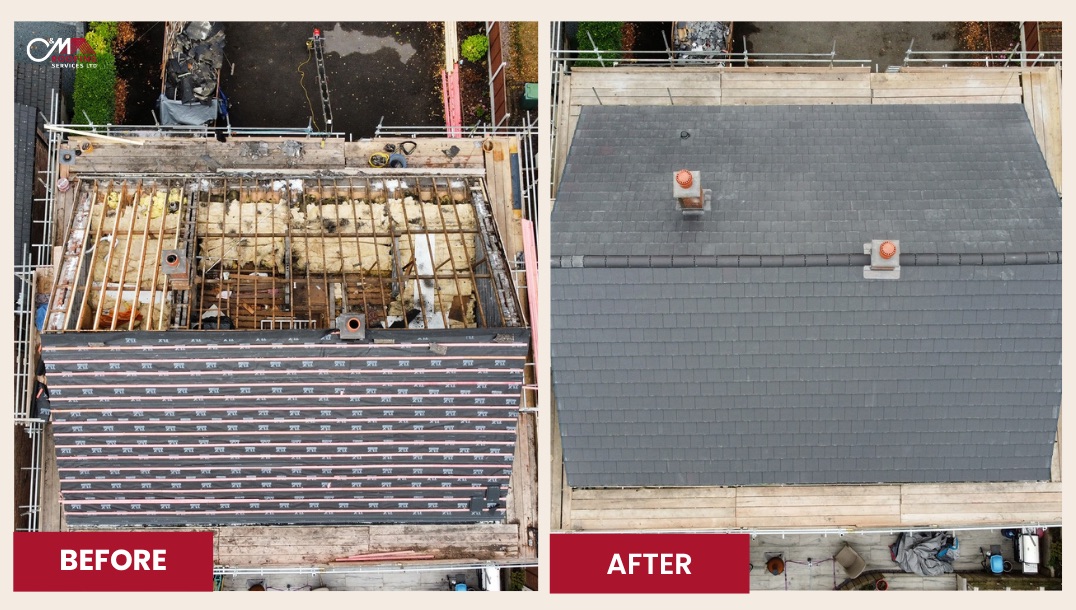
Certain warning signs demand immediate action. Active leaks or spreading ceiling stains mean damage is happening right now, not someday. When the roof structure itself begins to sag or dip, the problem has moved beyond the surface to the framework beneath. Missing tiles, large cracks, or daylight visible from your loft are just as serious; they leave your home vulnerable to rapid deterioration with every rainfall
Non-urgent concerns still need professional evaluation soon. Here’s what warrants a scheduled inspection rather than an emergency callout:
- Curling, cracking, or brittle tiles and shingles indicate advanced weathering
- Widespread moss or algae growth suggests moisture retention problems
- Granules collecting in gutters (if you have asphalt shingles) show surface deterioration
- Damaged flashing around chimneys, vents, or skylights creates future leak points
- Blocked or overflowing gutters stress the roof edge and fascia boards
- A roof approaching its expected lifespan for the material deserves inspection regardless of visible problems
For urgent signs, contact a qualified roofing contractor immediately. Non-urgent concerns warrant scheduling a professional inspection within the next few weeks to determine whether repair or replacement makes most sense. Don’t ignore the subtle signals (they always become expensive problems eventually).
When to Repair vs Replace Your Roof
The repair-or-replace decision isn’t always straightforward. Several factors help you make the most cost-effective choice.
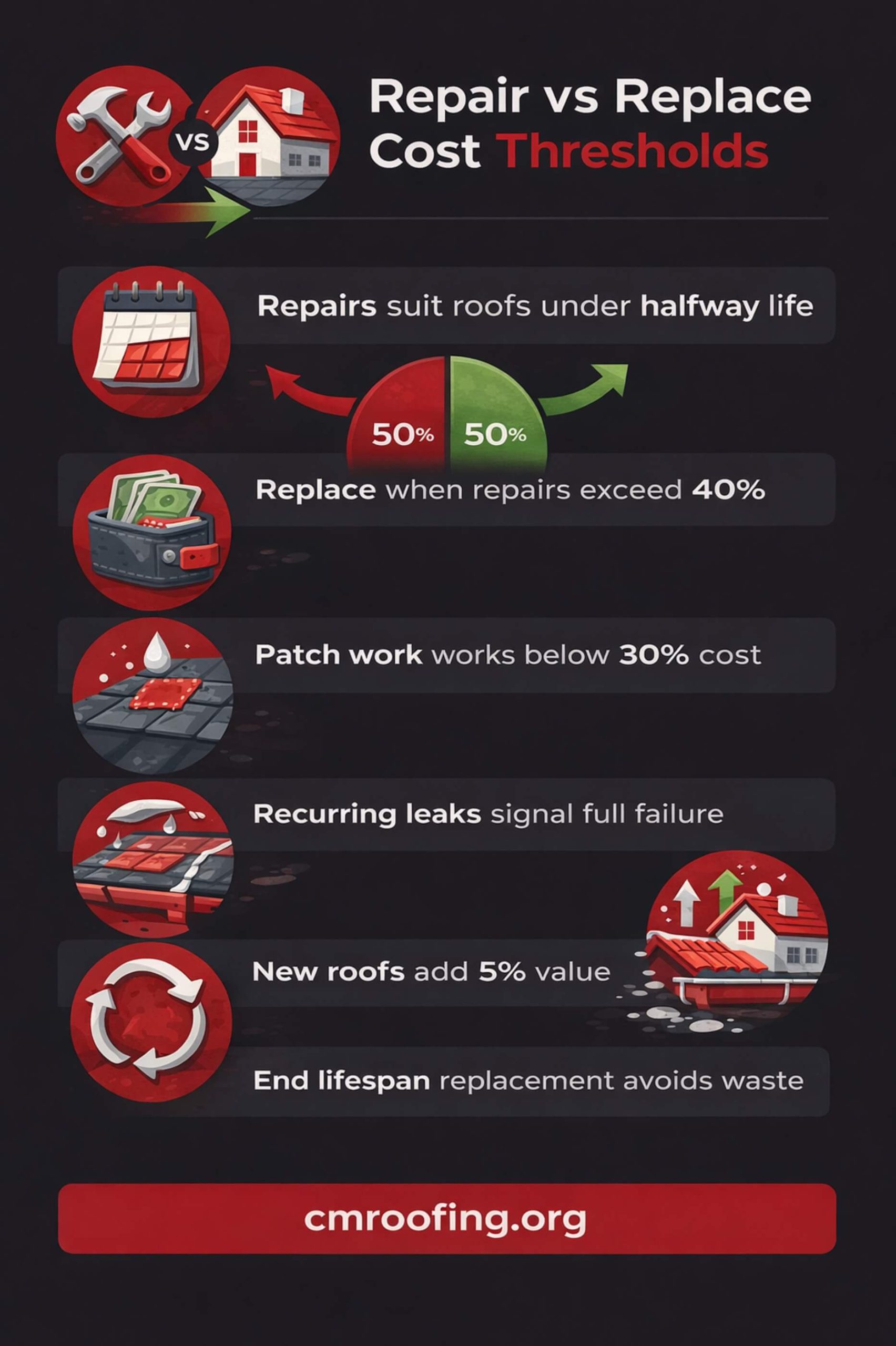
Consider repairs when your roof is less than halfway through its expected lifespan.
If damage is localised (storm damage, fallen branch impact), repairs typically make perfect sense. Sound structural decking suggests the roof has plenty of life left. When repair costs run less than 30% of replacement cost, patching up is usually sensible. Well-maintained roofs without recurring problems are excellent repair candidates.
Consider replacement when you’ve reached or exceeded your roof’s expected lifespan.
Widespread deterioration across large areas suggests systemic failure rather than isolated problems. Recurring leaks despite multiple repairs indicate the whole system is failing. When repairs would cost 40% or more of replacement, you’re throwing good money after bad.
If you’re planning to sell, a new roof can add up to 5% to your property value (that’s roughly £10,000 on a £200,000 home). Inadequate insulation is another replacement trigger, especially if you need to comply with current UK Building Regulations.
An honest professional assessment helps you determine the most cost-effective option for your specific situation. Repeated patch repairs eventually become inefficient compared to full replacement (even if each individual repair seems affordable at the time).
How to Maintain a Roof for Maximum Lifespan
Regular maintenance can add 20 years to your roof’s life and prevent most major problems before they start.
Inspect twice yearly. Check your roof every spring and autumn for damaged tiles, blocked gutters, and moss growth. Early detection means simple repairs instead of costly replacements.
Keep water moving. Clear gutters prevent overflow that rots fascia boards and damages walls. Remove moss professionally; it holds moisture against tiles and accelerates freeze-thaw damage. Never pressure-wash tiles yourself, as this often causes more harm than good.
Address problems immediately. A single missing tile seems minor, but it lets water reach timber that costs thousands to replace. Fix small issues within weeks, not months.
Improve ventilation. Proper loft airflow prevents condensation that rots timber and degrades materials from underneath. It’s often the hidden factor that separates roofs that last 30 years from those that reach 60.
Consistent care costs little but delivers outsized returns. An hour of inspection twice yearly beats a £10,000 emergency repair.
Conclusion
Knowing how long UK roofs last helps you plan ahead. Materials matter, but maintenance makes a huge difference. Our weather (rain, wind, frost, and moss) takes its toll, so regular checks are key. Spotting problems early saves money and adds years.
If you’re unsure about your roof’s condition or how much life it has left, we’re here to help. With 30+ years’ local experience, we give straight-up advice and carry out compliant repairs or replacements built to last.
Get your free quote today. We’ll assess your roof’s current condition, explain your options clearly, and help you make the decision that’s right for your property and budget.
FAQs
What is the average lifespan of a roof in the UK?
The typical UK roof lasts 20–30 years, depending on the material and maintenance. Pitched roofs often achieve 40–60 years, while flat roofs usually last 20–30 years. Slate can endure 80–150+ years with proper care, whereas asphalt shingles generally last 15–25 years.
How often should I have my roof inspected?
At least every two years, though annual inspections are ideal. Older or complex roofs benefit from spring and autumn checks. Some British Standards and insurance policies require annual or bi-annual inspections.
Does a new roof add value to my house?
Yes. A new roof can add up to 5% to property value and improve buyer confidence, especially in competitive markets.
Do I need Building Regulations approval to replace my roof?
Approval is required when replacing 25% or more, altering the structure, or re-roofing 50%+, which also triggers insulation upgrades.
How can I tell if my roof needs replacing or just repairs?
Replace roofs near end of lifespan, with widespread damage or recurring leaks. Repairs suit localised issues on structurally sound roofs.