

Quick Answer: Generally, Velux windows fall under permitted development rights and don't need planning permission. Exceptions include listed buildings, conservation areas, flats, and if projections exceed 150mm. Always check local regulations before installation.
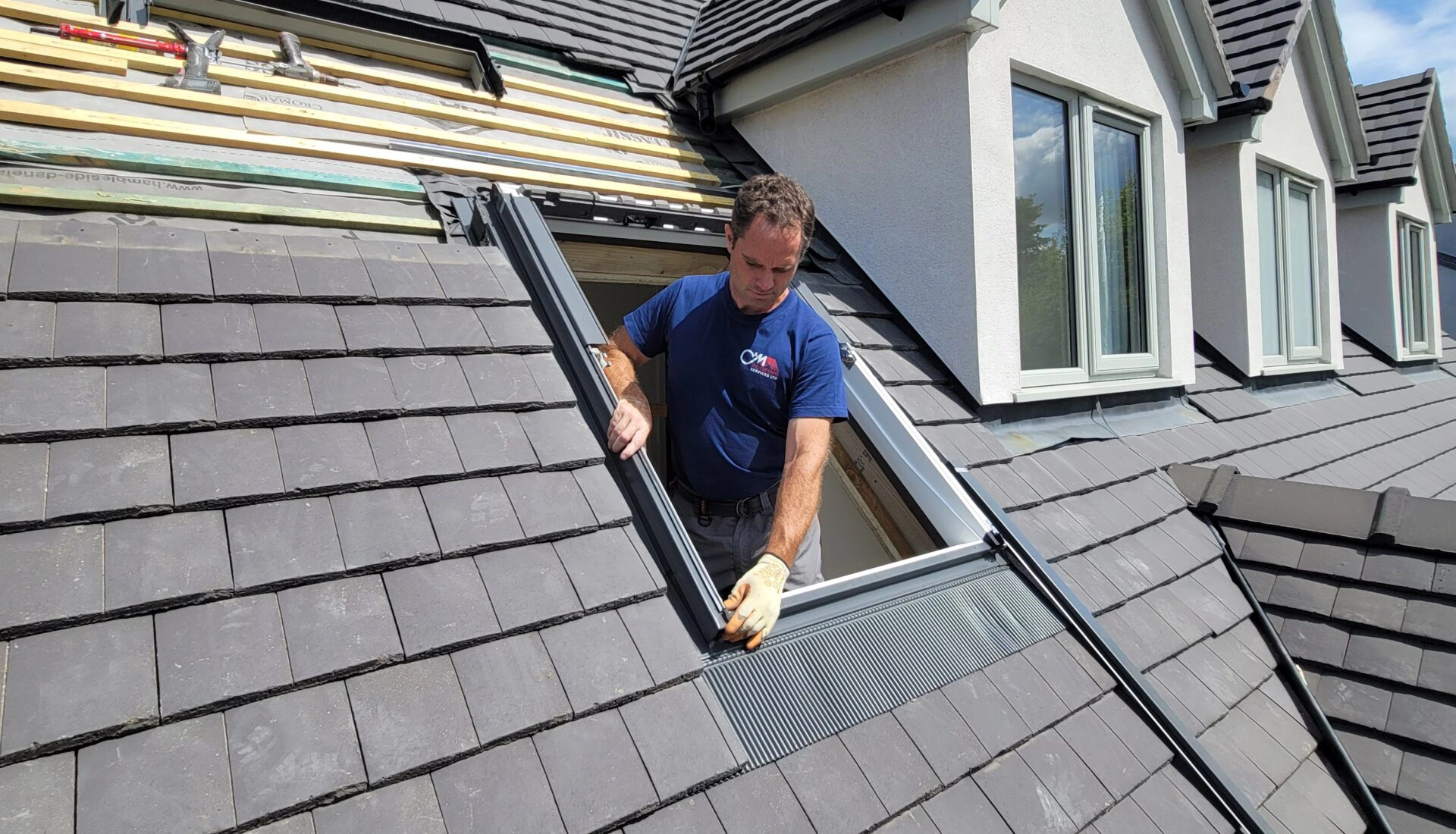
Velux windows are a brilliant way to flood your attic or loft space with natural light. But before you start planning that dreamy sun-drenched space, you need to understand the rules. Most Velux installations fall under permitted development rights, but there are important exceptions. This guide will walk you through everything you need to know to stay on the right side of planning regulations.
Key Takeaways
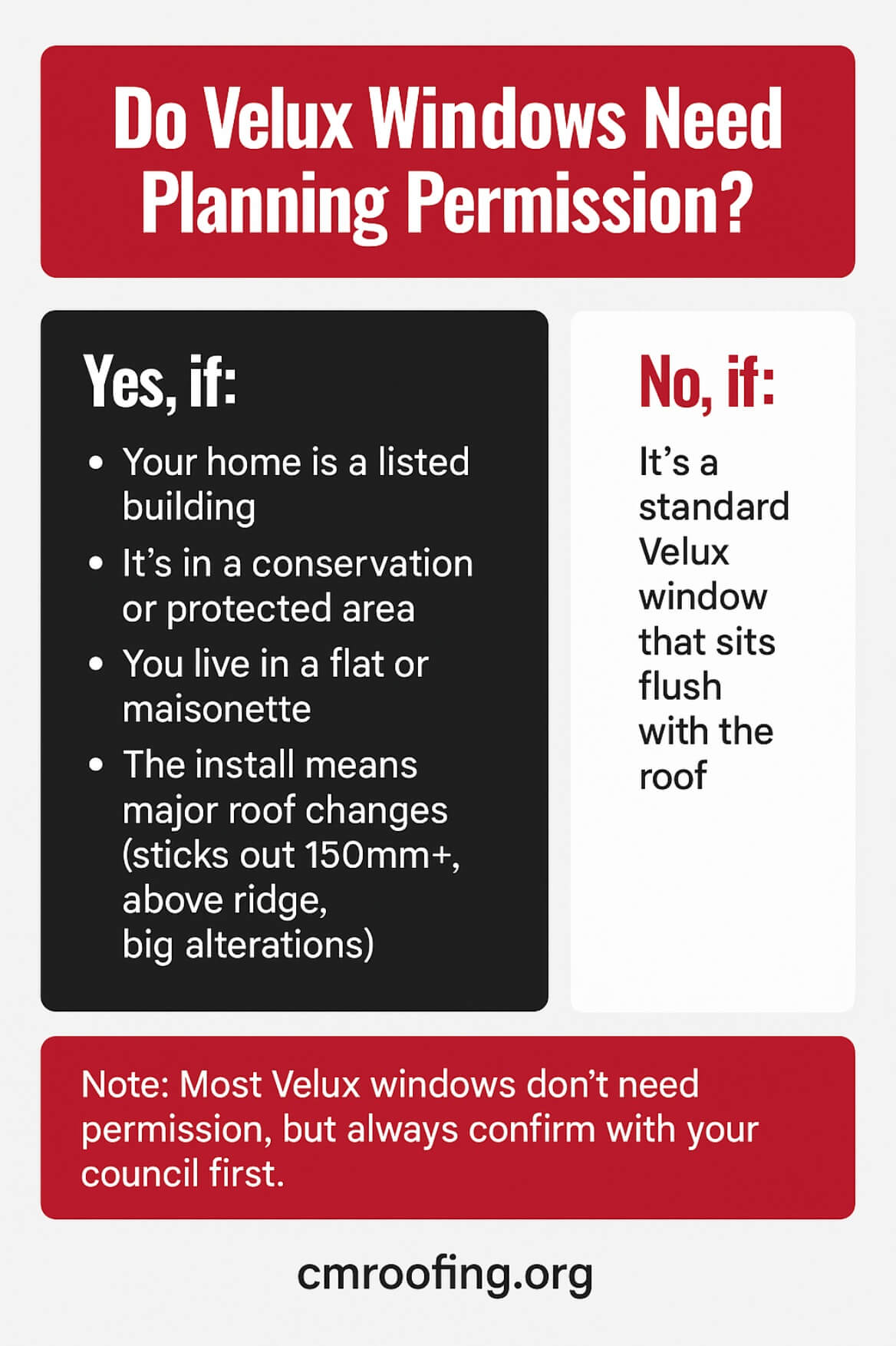
- Most Velux window installations are permitted development and don’t require planning permission if they project less than 150mm from the roof.
- You’ll need planning permission if your home is listed, in a conservation area, a flat/maisonette, or if making significant roof alterations.
- Even without planning permission, all Velux installations must comply with Building Regulations for fire safety, ventilation, and energy efficiency.
Do Velux Windows Need Planning Permission?
Velux windows typically fall under what’s called “permitted development rights” in the UK. This means you can often install them without applying for formal planning permission.
However, there are specific conditions your installation must meet:
| Condition | Requirement | Why It Matters |
|---|---|---|
| Projection | Must not protrude more than 150mm beyond the existing roof plane | Ensures minimal visual impact |
| Height | Must not be higher than the highest part of the roof | Maintains the roof's original profile |
| Side-facing windows | Must be obscure-glazed and non-opening below 1.7m from floor level | Protects neighbours' privacy |
Standard Velux window installations usually comply with these requirements naturally. The sleek design of Velux products means they typically sit flush with your roof, projecting less than the 150mm limit.
For front-facing windows (those visible from the street), there are usually no special glazing requirements as long as they meet the projection and height rules.
When Planning Permission Is Required
While many Velux installations fall under permitted development, certain circumstances will require formal planning permission.
Listed Buildings
If your home is listed, you’ll almost certainly need Listed Building Consent before installing Velux windows, regardless of whether they meet permitted development criteria.
For instance, a homeowner in the Cotswolds with a Grade II listed cottage would need to apply for Listed Building Consent before installing any roof windows. The application would need to demonstrate that the windows wouldn’t harm the building’s special architectural or historic interest.
Conservation Areas and Protected Zones
Properties in conservation areas may face additional restrictions through what’s called Article 4 Directions. These can remove permitted development rights.
England has 9,907 conservation areas, with about 4.8% (475) considered “at risk.” If your property is within one of these areas, check with your local planning authority before proceeding.
In World Heritage Sites, National Parks, and Areas of Outstanding Natural Beauty, even permitted development projects often face additional scrutiny.
Flats and Maisonettes
Permitted development rights typically don’t apply to flats and maisonettes. If you live in an apartment building and want to install a Velux window, you’ll likely need planning permission.
This is because alterations to these buildings can affect the entire structure and other residents. The rules also help maintain a consistent appearance across the building.
Significant Roof Alterations
If your Velux installation forms part of a larger roof alteration, such as a loft conversion that changes the roof profile, you’ll probably need planning permission.
Consider a semi-detached house in Manchester. Adding a single Velux window to the existing roof slope would likely be permitted development. However, constructing a dormer with multiple Velux windows would require planning permission as it significantly alters the roofline.
Steps Homeowners Should Take Before Installation
Before ordering your Velux windows, follow these essential steps to ensure compliance:
- Check your property status: Determine if your home is listed or in a conservation area by contacting your local authority or checking their online maps.
- Review local policies: Some local councils have specific policies about roof alterations. Check your local authority’s website or planning portal.
- Measure carefully: Ensure your planned installation meets the 150mm projection limit and other criteria for permitted development.
- Consult professionals: Speak with professional Velux window installers who understand local regulations and can advise on compliance.
- Get written confirmation: Consider applying for a Lawful Development Certificate from your local planning authority, which provides formal confirmation that your project doesn’t require planning permission.
Recent statistics show that 89% of householder applications are granted, with 93% decided within 8 weeks. However, avoiding the need for planning permission altogether saves time and money if your project qualifies as permitted development.
Building Regulations for Velux Windows
Even when planning permission isn’t required, all Velux window installations must comply with Building Regulations. These regulations ensure your installation is safe, energy efficient, and properly ventilated.
| Building Regulation | Requirement | Importance |
|---|---|---|
| Fire Safety (Part B) | Escape windows must have a minimum openable area of 0.33m² | Critical for emergency exits, especially in loft conversions |
| Ventilation (Part F) | Windows should have an openable area ≥ 1/20 of the room's floor area | Ensures adequate air exchange and prevents condensation |
| Energy Efficiency (Part L) | Specific U-values required (typically around 1.6 W/m²·K for roof windows) | Reduces heat loss and improves energy performance |
| Safety Glazing (Part K) | Toughened/laminated glass required in "critical locations" | Prevents injury from broken glass |
For loft conversions that include Velux windows, additional regulations apply:
- Minimum head heights in the converted space
- Structural support requirements
- Insulation standards
- Staircase specifications if permanently accessible
Building Regulations approval is separate from planning permission. You’ll need to either submit a full plans application to your local Building Control department or use a private approved inspector.
The requirement for Building Regulations approval applies throughout the UK, though specific requirements may vary slightly between England, Scotland, Wales, and Northern Ireland.
Final Note
While most standard installations don’t require planning permission, checking your specific circumstances is essential before proceeding.
For expert advice on Velux window installation that complies with all planning and building regulations, contact our professional team today. We’ll help you navigate the requirements and ensure your installation meets all necessary standards while maximising the benefits for your home.
FAQs
Do Velux windows need planning permission in the UK?
Most Velux window installations don’t need planning permission in the UK if they project less than 150mm from the roof plane, don’t exceed the height of the roof ridge, and side-facing windows are obscure-glazed. However, exemptions apply for listed buildings, some conservation areas, and flats.
What rules apply in conservation areas or listed buildings?
Listed buildings always require Listed Building Consent for any alterations. In conservation areas, Article 4 Directions may remove permitted development rights, requiring full planning permission. Always check with your local conservation officer before proceeding.
Do loft conversions with Velux windows need permission?
Simple loft conversions using only Velux windows (without raising the roof or adding dormers) often fall under permitted development. However, structural alterations, changing the roof shape, or exceeding the 150mm projection limit will require planning permission.
What building regulations apply to Velux windows?
Building regulations covering fire safety, ventilation, energy efficiency, and safety glazing all apply to Velux windows. Key requirements include minimum opening sizes for escape windows, ventilation proportional to room size, and specific U-values for thermal performance.
How can I check if my property needs planning approval?
Contact your local planning authority or check their website to determine if your property is listed or in a conservation area. You can also apply for a Lawful Development Certificate if you want formal confirmation that your project doesn’t require permission.