
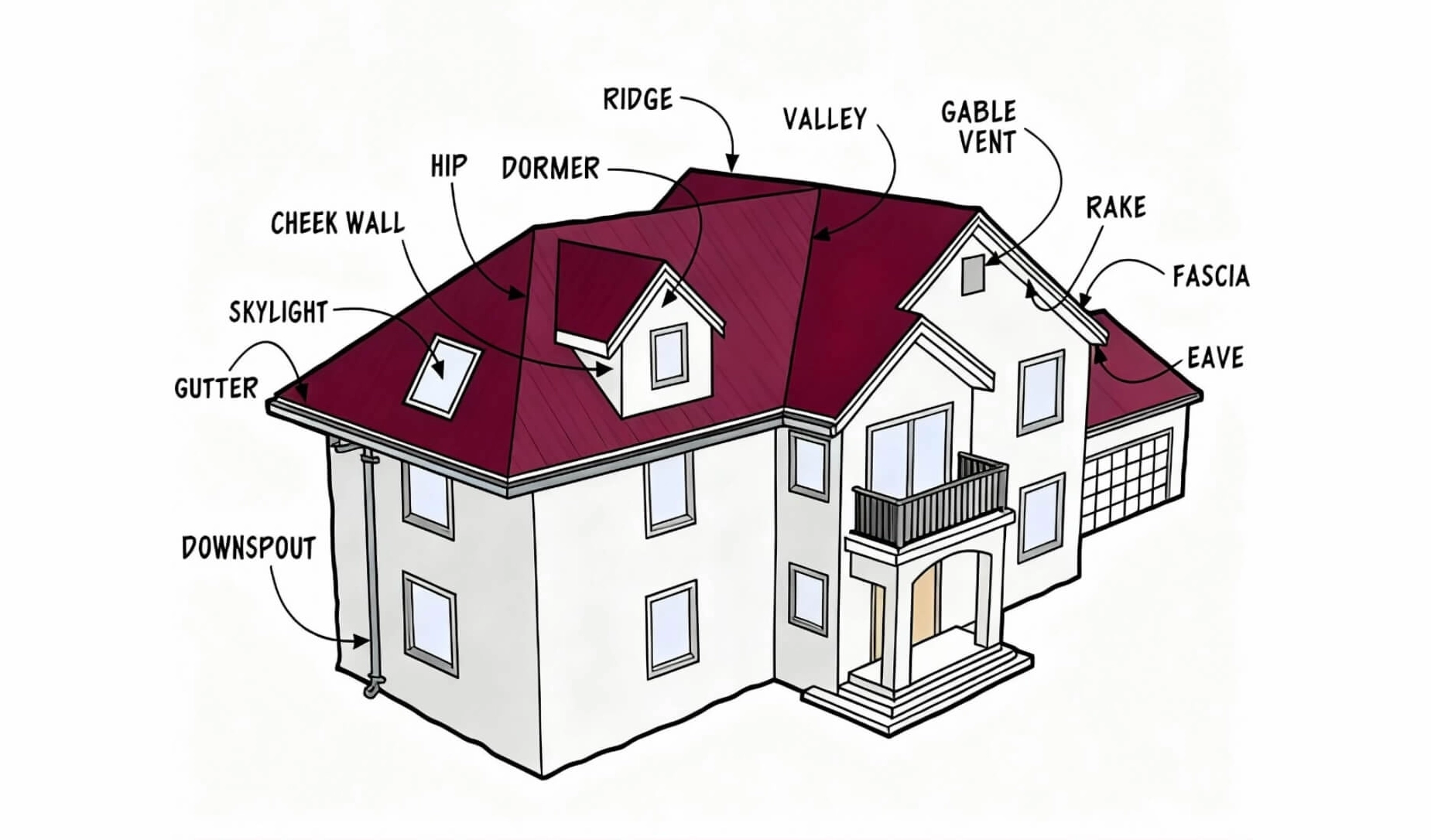

Quick Answer: Your roof is a complex system of structural components (rafters, trusses), protective layers (tiles, underlayment), and water management features (flashing, gutters) working together to shield your home from the elements.

roof

Your roof is your home’s first line of defence against the weather. It keeps you dry during rainstorms, warm in winter, and protected from the elements year-round. When you can identify the different parts of your roof, you gain confidence in maintaining your home. You’ll know exactly what needs attention when getting quotes and understand the scope of work required. This knowledge saves you money and prevents minor issues from becoming major headaches.

Key Takeaways

  1. Every roof consists of three essential systems: structural components that provide support, protective layers that shield against weather, and water management features that direct rainfall away from your home.
  2. Regular inspection and maintenance of all roof components can extend your roof’s lifespan by decades and prevent costly water damage to your home’s interior.
  3. Understanding basic roof terminology helps you communicate effectively with professionals and make informed decisions about repairs, replacements, and upgrades.

Main Parts of a Roof

A typical roof consists of several crucial components that work together as a system. Each part plays a specific role in protecting your home from the elements.

parts of a roof

Structural Components of a Roof

The structural components form the skeleton of your roof, providing the strength and stability needed to withstand weather conditions and support the weight of all roofing materials.

Ridge Beam

The ridge beam runs along the highest point of the roof, supporting the upper ends of the rafters or trusses. In some designs, it’s a structural member carrying significant loads, while in others, it mainly serves to connect rafters.

Rafters

Rafters are the backbone of traditional roof construction. These sloping beams run from the ridge to the wall plates, creating the pitched shape. They’re typically spaced 400-600mm apart in UK construction.

In the UK, rafters must be sized according to specific standards to handle local wind and snow loads. The spacing, dimensions, and material quality all affect the roof’s structural integrity.

Trusses

Modern homes often use trusses instead of traditional rafter construction. These prefabricated frames combine rafters, joists, and beams into a single unit, providing excellent strength with less timber.

Trusses offer greater design flexibility and faster installation compared to rafters. They’re engineered to distribute weight evenly across your home’s walls.

Joists

Ceiling joists run horizontally, connecting the lower ends of opposing rafters. They prevent the rafters from spreading apart under load and often serve as the structure for your ceiling.

In flat roofs, joists rather than rafters carry the loads to the walls. Like rafters, they must be properly sized for anticipated loads.

Decking/Sheathing

The decking creates a continuous surface across rafters or trusses. In the UK, this is typically constructed from:

  • OSB (Oriented Strand Board)
  • Plywood
  • Traditional timber boarding (in older properties)

Covering & Protection Layers

The covering layers are what most people think of when they picture a roof. These components keep water out while protecting the structure beneath.

Material Type Typical Lifespan Cost Range Maintenance Level
Concrete Tiles 40–50 years Medium Low
Clay Tiles 60+ years High Low
Natural Slate 80–100+ years Very High Very Low
Fibre-Cement Slates 30–60 years Medium Low
Asphalt Shingles 15–30 years Low–Medium Medium
Metal Roofing 40–70 years High Low
Flat Roof Membranes 15–40 years Medium Medium

Underlayment Systems

Modern roofs use underlayment as a crucial second line of defence. UK standards specify two main types:

  1. Breather (vapour-permeable) membranes – Allow moisture vapour to escape while preventing liquid water ingress
  2. Non-breather membranes – Provide waterproofing but require additional ventilation

Flashing

Different areas of your roof require specific flashing solutions:

  1. Step Flashing: Used where a roof meets a wall, installed in overlapping pieces.
  2. Kickout Flashing: Diverts water away from walls at the end of roof-wall intersections.
  3. Valley Flashing: Protects the valleys where roof planes meet.
  4. Chimney Flashing: Complex flashing system around chimneys with base, step, and counter flashing components.

Ventilation & Finishing Touches

Proper roof ventilation is crucial for extending the life of your roof and preventing moisture-related problems.

Ridge Vents

These run along the peak of the roof, allowing warm, moist air to escape from the attic space. They’re often hidden beneath ridge caps for a seamless appearance.

Soffit Vents

Located in the soffit (the underside of the eaves), these vents allow fresh air to enter the attic space, creating proper airflow when paired with ridge vents.

Fascia Boards

Fascia boards are the exposed vertical boards that cap the end of rafters and support the lowest row of tiles and the guttering. They’re usually made of wood or uPVC in modern UK homes.

Regular inspection of fascia boards is essential as rot can provide entry points for pests and compromise gutter attachments.

Water Management Features

Effective water management is perhaps the most critical function of your roofing system. In the rainy UK climate, these components are essential for protecting your home from water damage.

Gutters

Gutters collect rainwater from the roof edges and channel it to downpipes. They’re typically made from:

  • uPVC (most common in the UK)
  • Aluminium
  • Cast iron (traditional properties)
  • Copper (premium options)

Blocked gutters are one of the most common causes of roof-related problems. Recent UK housing surveys indicate a 5% increase in damp issues, often linked to poor rainwater management.

Downpipes/Downspouts

These vertical pipes carry water from gutters down to ground level drainage systems or water butts. Properly sized and positioned downpipes are essential for efficient water removal.

Valleys and Crickets

Valleys channel water where roof planes meet. For chimneys and other large obstacles, crickets (or saddles) direct water around the obstruction to prevent pooling.

Special Features & Roof Additions

Many roofs include special features that require particular attention to detail during installation and maintenance.

Dormers

These projections create additional space and light in attic areas. Each dormer has its own mini-roof system with all the components of the main roof, plus additional flashing requirements where it joins the main roof.

Chimneys

Chimneys penetrate the roof and require careful flashing to prevent leaks. The junction between the chimney and the roof is a common failure point if not properly maintained.

Skylights

These windows set into the roof plane bring natural light into the home. Modern skylights must meet specific thermal performance standards (in the UK, the U-value must not exceed 2.2 W/m²·K) and require expert installation to prevent leaks.

Maintenance, Damage & Safety

Regular roof maintenance extends your roof’s lifespan and helps you avoid costly repairs. Our professional roofing services can help keep your roof in top condition.

Seasonal Inspection Checklist

  • Spring: Check for winter damage, clear debris
  • Summer: Look for cracked or damaged tiles/slates
  • Autumn: Clean gutters of leaves and debris
  • Winter: Check for ice dams after snowfall

Common Problems to Watch For

Catching problems early can save thousands in repair costs.

watch out for this roof problems

Safety Considerations

Roof inspection and maintenance can be dangerous. Always use proper safety equipment and consider hiring professionals for anything beyond basic visual inspections from the ground or a securely placed ladder.

Common Roof Terminology (Quick Reference)

  • Eaves: The lower edge of a roof that typically overhangs the wall
  • Fascia: Vertical board attached to the ends of rafters, supporting guttering
  • Soffit: The underside of the roof eaves containing ventilation
  • Valley: Internal angle where two roof slopes meet
  • Ridge: Horizontal peak where roof slopes meet
  • Hip: External angle formed by the meeting of adjacent roof slopes
  • Flashing: Metal strips sealing joints between roof sections
  • Battens: Horizontal strips supporting tiles or slates
  • Felt: Traditional underlayment material beneath tiles
  • Counter Battens: Vertical battens creating drainage space in some roof designs
  • Truss: Prefabricated structural roof framework
  • Purlin: Horizontal beam supporting rafters midspan
  • Verge: Edge of a gable roof that overhangs the gable wall
  • Sarking: Structural boarding over rafters

Final Take

With over 30 years of experience, we understand British weather demands and how to protect your home properly. Whether you need minor repairs or a complete roof system, contact our roofing specialists for a free, no-obligation assessment of your roof’s condition. Your home deserves the best protection possible.

FAQs

What are the main parts of a roof?

The main parts include the structural components (rafters, trusses, decking), protective layers (underlayment, shingles/tiles), and water management features (flashing, gutters, downpipes). All work together to protect your home from weather elements.

How do I identify roof damage?

Look for missing or damaged tiles, water stains on ceilings, sagging areas, damaged flashing, blocked gutters, or excessive granules from asphalt shingles in gutters. After storms, check for loose materials or new leaks.

What’s the difference between rafters and trusses?

Rafters are individual sloped beams that form the roof frame, while trusses are prefabricated triangular structures combining rafters and ceiling joists. Trusses span longer distances and distribute weight more efficiently.

What’s the purpose of roof underlayment?

Underlayment provides a secondary water barrier beneath the main roof covering. It protects the roof deck from moisture that penetrates the outer layer and helps prevent leaks during installation and extreme weather.

How often should I inspect my roof?

Inspect your roof at least twice yearly, ideally in spring and autumn. Additional checks after severe weather events are recommended. Professional inspections every 3-5 years can identify issues not visible from the ground.